From Rolling Hills to Rolling Wheels: Z&W Trucking
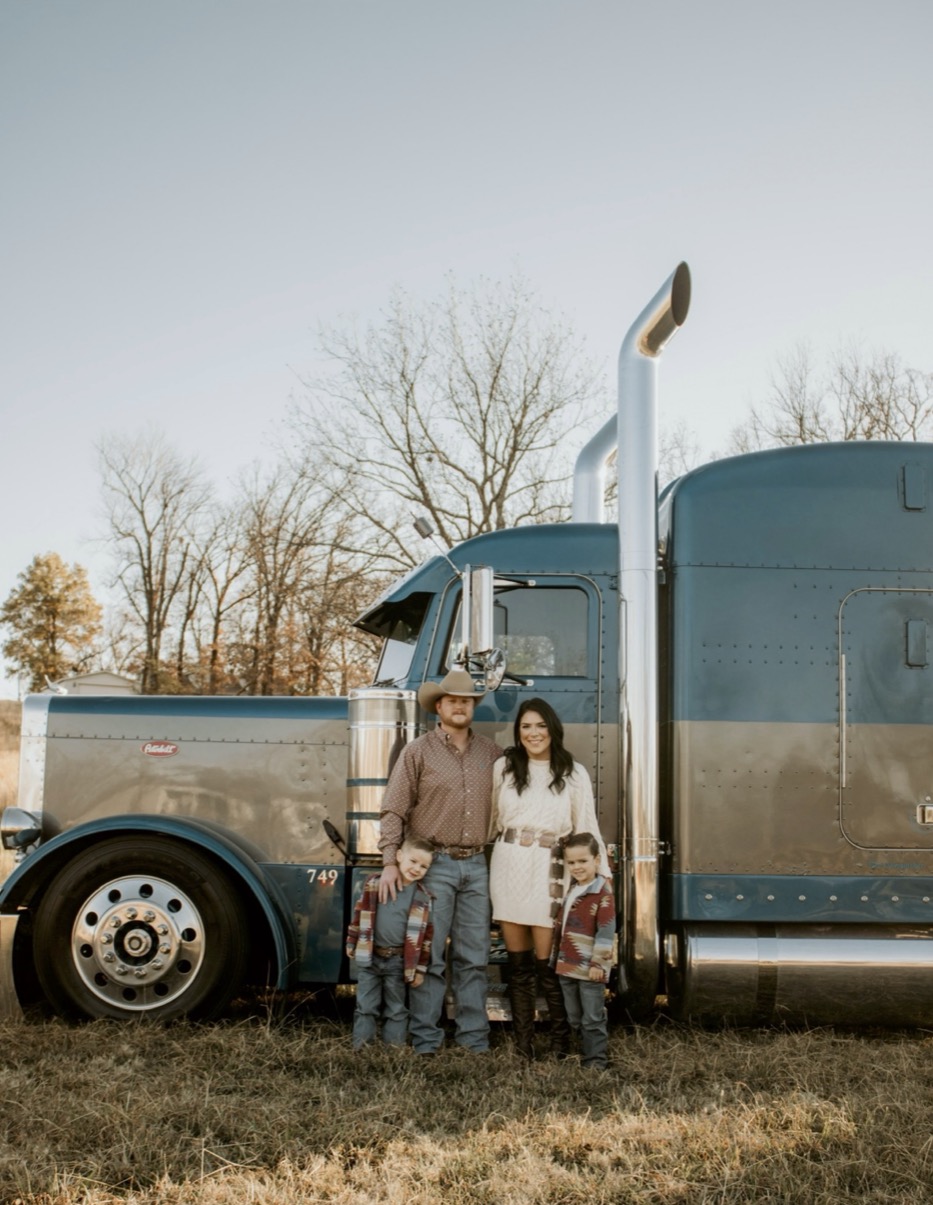
Zach and Rachel Weeks, owners of Z&W Trucking, with their young sons
In far northeast Oklahoma, Hulbert is known for its rolling hills and rich cultural heritage. It’s a tight-knit, welcoming community where 30-year olds Zach and Rachel Weeks have chosen to raise their young family and turn their passion for trucking into a thriving business.
Zach, a member of the Peoria Tribe, and Rachel, who is Otoe-Missouria, have forged close relationships in the small town and embarked on a remarkable journey, founding Z&W Trucking together.
Their story is a testament to resilience, community support, and the power of trust, evidenced by the relationship the Weeks formed with Local Bank Hulbert, a Native-owned, female-owned CDFI dedicated to serving rural, Native American and underserved communities.
The journey to make Z&W Trucking successful doesn’t follow a straight path, but it began in Zach’s grandfather’s home when Zach was just a boy.
“My granddad drove a truck when I was a little kid. We would play with toy trucks on the floor. That’s what he did, and I thought my granddad was the coolest guy in the world,” Zach said.
Even though he loved playing with trucks, Zach began his career as a welder. He and Rachel traveled the country with their two young sons, passing big rigs along the highways. On those long rides, they realized a shared passion for trucking, and memories of Zach’s childhood fascination lingered.
“We were infatuated with trucks. We liked the big, shiny rigs going down the road. We liked looking at them, and we were tired of chasing welding all over the country,” Zach said.
In 2017, driven by a shared dream and a desire to settle down, Zach and Rachel made a bold decision. On a whim, they drove the four hours to Dallas and bought their first truck. Zach admits very little planning went into their decision, but they were also ready to chase their dreams and invest in themselves.
Starting a business is never easy, and Zach admits the first years were difficult. After some initial steady growth, Z&W nearly collapsed due to a lack of sustainable local freight, but the peaks and valleys were a valuable learning process, and they kept going.
“At one point, I could see trouble on the horizon. We hadn’t hit bottom yet, but I needed to make changes fast. At the time, I was working with Local Bank and another institution. I asked the other bank for help offloading equipment so I could invest in a road tractor, but they couldn’t see my vision,” Zach said. “That’s when I called Terry Lockhart with Local Bank. He said there was no reason to waste time on the phone. I should stop by, and let’s get it going. That was the push we needed, and we’ve been working with Local Bank ever since.”
 At that moment, they transformed their relationship from occasional business into a true partnership. Local Bank’s mission-driven banking philosophy to serve rural, Native American, and underserved communities has been critical in Z&W’s journey and in helping Zach and Rachel realize their dreams as they struggled at crucial junctures.
“I think we were a little too small for other banks. But Local Bank saw something in us and was always understanding during the hard times. I’ve always given my word and stood behind it. I haven’t let them down, and they haven’t let me down, so it’s been a good relationship,” Zach said. “I do business with people all over the United States and have not met anyone with a banking relationship like mine. Local Bank has always been willing to do everything we needed. They’ve never backed down from my crazy ideas. Instead, they’ve helped me structure them and figure out how to make them work.”
Zach and Rachel are realistic about the future. They now own eight trucks and employ several drivers. They know there will always be ups and downs in an industry as ever-changing as trucking, but they know Local Bank will treat them as more than a number.
“This industry is tough. Even if the freight or numbers are great, it’s still extremely challenging. Insurance, fuel prices, and having people spread all over the country are just a few of the variables that make it a challenging industry,” Zach said. “And so many banks I’ve dealt with are on such a corporate level that I feel like I don’t matter. But Local Bank treats my problems like they matter and is always willing to do what it takes.”
The mission-driven banking that CDFIs bring and the support of organizations like Oweesta keep Zach optimistic about the future.
“I think anything is possible. If you can dream it, you can do it.” Zach emphasizes the importance of community engagement and networking. “Don’t be afraid to know your community and talk to people.”
Organizations like Oweesta are always there to help Native American entrepreneurs like Zach and Rachel find the resources and encouragement they need to succeed, inspiring and uplifting others facing similar situations.
(This story was originally featured in Oweesta’s 2023 Annual Report.)